



Dear Fellow Journalists, this document serves as both a Journalist Orientation Package and a Basic Background Intelligence Report for the European Capital of Culture 2025, Nova Gorica–Gorizia.
Pronunciation of the names of both cities: Nova Gorica (Slovenia) and Gorizia (Italy).
Nova Gorica – NOVA GORICA ️️️️
Gorizia – GORIZIA ️️️️
Expected Challenges for Journalists:
- Navigating two countries (Slovenia and Italy) with different languages, regulations, and logistics.
- Ensuring balanced coverage of both Nova Gorica (Slovenia) and Gorizia (Italy).
- Potential language barriers and cultural nuances.
This document is designed to:
- Save Time: By providing all essential information in one place, journalists can avoid hours of research and focus on their reporting.
- Ensure Accuracy: With recorded pronountiations of names and places, verified facts, historical context, and practical tips, journalists can avoid common mistakes and misrepresentations.
- Simplify Navigation: The report is structured to help journalists quickly find the information they need, whether it’s cultural norms, logistical details, or emergency contacts.
- Enhance Understanding: By offering deep insights into the region’s history, politics, and cultural significance, journalists can produce more nuanced and impactful stories.
This orientation package is a one-stop resource for foreign journalists covering the European Capital of Culture 2025 Nova Gorica-Gorizia, ensuring they are well-prepared to navigate the complexities of this unique cross-border event.
About the European Capital of Culture 2025
The European Capital of Culture (ECOC) initiative is one of the most prestigious cultural programs in the European Union, designed to highlight the richness and diversity of European cultures, foster cross-border collaboration, and promote a shared European identity.
Each year, the title is awarded to one or more cities or regions, which then host a year-long program of cultural events and activities. The project signifiance lies as it provides a critical platform to explore the future of Europe as a shared project.
In 2025, the title was awarded to two cities. The titleholders for ECoC 2025 are (with pronountiations):
- Nova Gorica, Slovenia ️ ️ ️
- Chemnitz, Germany ️️ ️
Additionally, Gorizia, Italy, was invited to partner with Nova Gorica as Gorizia a joint-partner in the project, forming a unique cross-border collaboration officially named GO! 2025 NOVA GORICA–GORIZIA.
This partnership enabled Italian Gorizia to participate in the program despite being ineligible to apply independently.
Notably, this marks the first time the European Capital of Culture (ECoC) title has been awarded to a pair of cities from two different countries, symbolizing unity and reconciliation in a historically divided region.
The primary challenge for both cities is overcoming fragmentation in historical memory, administrative divisions, and the lack of knowledge of both languages—a fundamental issue at the heart of Nova Gorica’s ECoC proposal. This will put the resilience and feasibility of the program’s objectives to the test.
Moreover, in 2025, the ECoC program will celebrate its 40th anniversary. Since its inception in 1985 by the European Economic Community (now the European Union), 83 cities have held this prestigious title.
The Rotation System for Choosing ECOC Cities
The selection of European Capitals of Culture follows a rotation system among EU member states, ensuring that the opportunity is distributed fairly across Europe. Here’s how it works:
- Pre-Determined Order: The EU establishes a rolling schedule of countries eligible to host the ECOC title each year.
- National Competitions: Eligible countries organize national competitions to select their candidate city or region.
- EU Evaluation Panel: A panel of independent experts evaluates the applications based on criteria such as cultural content, European dimension, and impact on long-term development.
- Final Decision: The European Commission formally designates the winning cities.
Text Us on WhatsApp To receive a FULL intelligence report on this topic, including a complete history, social and cultural background, story angles, locations, and pronunciations of names and places, you will also get a one-hour consulting call where we can work on your storyline and your plan for covering this topic.
Key Highlights
- First Cross-Border ECoC: Nova Gorica and Gorizia are the first pair of cities from two different countries to jointly host the ECoC.
- Themes: War and Peace, Creating the New, Smugglers, and Going Green.
- Budget: €20 million, funded by Slovenia, Italy, the EU, and private sources.
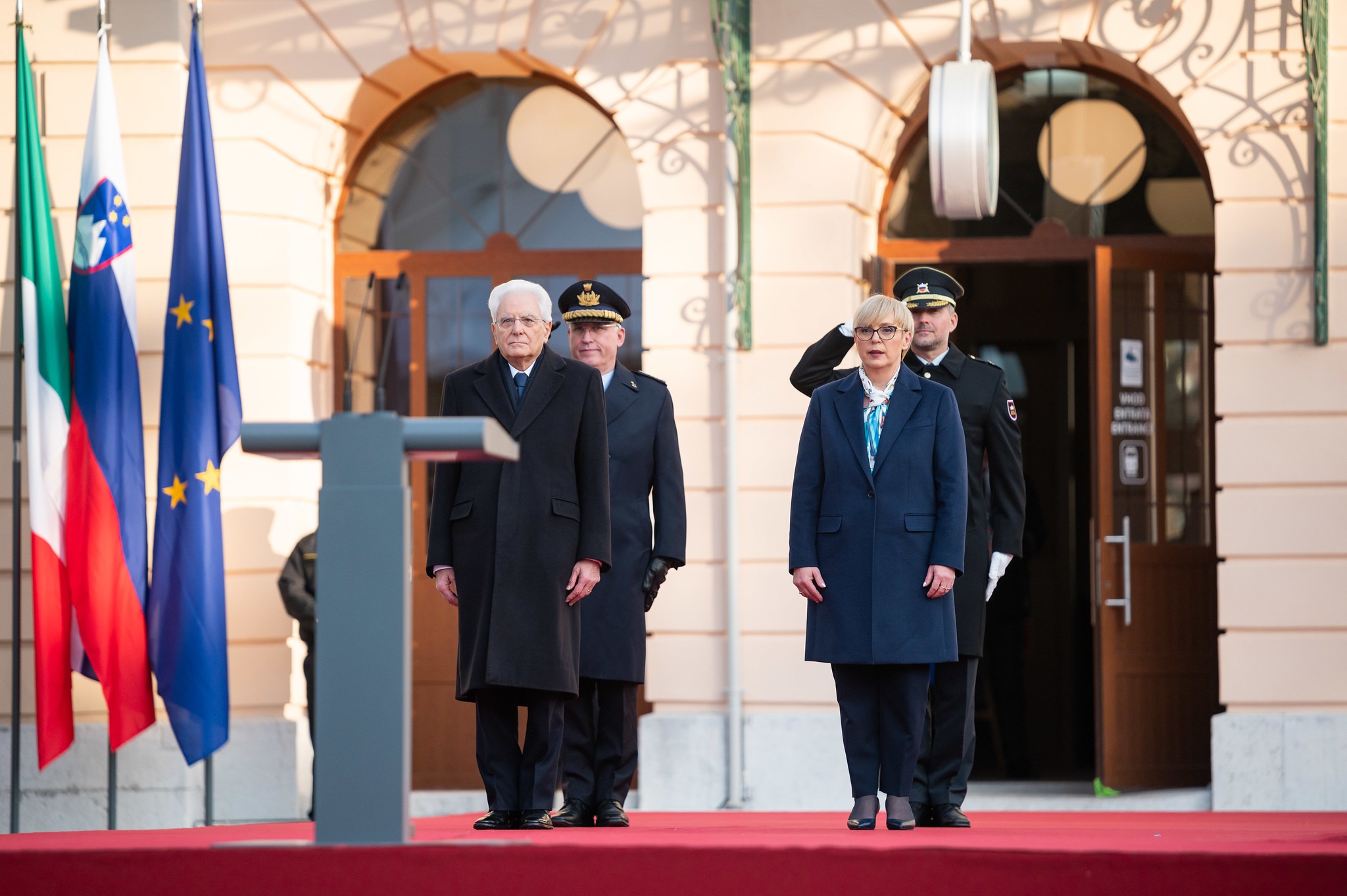
- Opening Ceremony: February 8, 2025, featuring Slovenia’s President Nataša Pirc Musar and Italy’s President Sergio Mattarella.
Key Dates Prior to Nova Gorica-Gorizia Being Awarded ECOC 2025
2016 – Announcement of the ECOC 2025 Competition
2017 – Launch of the National Bidding Process in Slovenia
2018 – Submission of the Bid Book
December 2018 – Pre-Selection Stage
2019 – Final Bid Submission and Presentation
June 2019 – Official Designation as ECOC 2025
2020–2024 – Preparation and Development Phase
2023–2024 – Pre-Events and Promotional Campaigns
2025 – Official Opening Event in Nova Gorica and Gorizia
Grand Ceremony February 8th 2025 in Nova Gorica : The opening event featured a spectacular ceremony with guests of honor, Slovenia’s President Nataša Pirc Musar and Italy’s President Sergio Mattarella, along with captivating performances, music, and artistic displays celebrating the unique cultural heritage of Nova Gorica (Slovenia) and Gorizia (Italy).
Historical Context
Post-WWII Division
After World War II, the Paris Peace Treaty (1947) divided the region: Gorizia remained in Italy, while Nova Gorica was established in Yugoslavia (now Slovenia). The Iron Curtain further deepened this divide, creating cultural and social fragmentation, but the strict division lasted only until 1955, when relations thawed and border crossings became more liberal.
EU Integration
Slovenia’s independence (1991) and EU accession (2004) allowed for renewed cross-border cooperation. The removal of border controls in 2007 facilitated cultural and economic ties, paving the way for the ECoC 2025 project.
Symbolic Reunification
ECoC 2025 symbolizes the reunification of Nova Gorica and Gorizia, celebrating their shared heritage and fostering reconciliation.
Cultural Context
Bilingualism in Gorizia and Shared Traditions
The region on the Italian side is bilingual (Slovene and Italian) and boasts a rich cultural blend, especially due to numerous Slovenian minority on the Italian side of the border:
- Festivals: Gorizia Folk Festival, Nova Gorica cultural events.
- Cuisine: Jota (stew), frico (cheese crisp).
- Landmarks: Gorizia Castle, Franciscan Monastery of Kostanjevica, Trg Evropa / Transalpina Square (one square with two names).
Cross-Border Collaboration
Past initiatives like the Gorizia-Nova Gorica Film Festival and EGTC GO (European Grouping of Territorial Cooperation) have strengthened ties.
Program Overview
The ECoC 2025 program is divided into four thematic sections:
- War and Peace:
- Explores the legacy of wars and the Iron Curtain.
- Activities: Exhibitions, theatre performances, discussions.
- Creating the New:
- Focuses on innovation in art, science, and technology.
- Activities: Workshops, technology fairs, digital art projects.
- Smugglers:
- Highlights smuggling as a symbol of overcoming borders.
- Activities: Exhibitions, culinary events, storytelling.
- Going Green:
- Emphasizes sustainability and natural heritage.
- Activities: Eco fairs, hiking tours, sustainable art installations.
Funding and Economic Impact
- Total Budget: €20 million.
- Slovenia: €10 million.
- Nova Gorica Municipality: €5 million.
- EU and private sources: €3.5 million.
- Economic Benefits: Increased tourism, job creation, and infrastructure development.
Challenges
- Historical Tensions: Lingering divisions from WWII and the Cold War.
- Language Barriers: Limited bilingualism in Gorizia.
- Political Controversies: Gorizia’s mayor faces criticism for hosting far-right commemorations.
Key Protagonists with pronoutiations
- Samo Turel – SAMO TUREL: Mayor of Nova Gorica. ️️️
- Rodolfo Ziberna – RODOLFO ZIBERNA: Mayor of Gorizia.
- Mija Lorbek – MIJA LORBEK: CEO of GO!2025. ️️️
- Matej Arčon – MATEJ ARČON: Former Mayor of Nova Gorica (2010-2018). His advocacy laid the groundwork for the successful GO! 2025 European Capital of Culture bid. ️️️
- Nataša Pirc Musar – NATAŠA PIRC MUSAR: President of Slovenia. ️️️
- Sergio Mattarella – SERGIO MATTARELLA: President of Italy. ️️️
- Neda Rusjan Bric – NEDA RUSJAN BRIC: The author of the winning bid for ECOC 2025 Nova Gorica-Gorizia. ️️️
- Stojan Pelko – STOJAN PELKO: The Program Director of GO!2025. ️️️
Locations and Their Significance for Journalists (with pronoutiation guide)
- Municipality Nova Gorica/Občina Nova Gorica (mayor Samo Turel office), Kardeljev trg 1, Nova Gorica, Slovenia
- Xcenter – GO! 2025 EPK ECoC, Delpinova ulica 20, Nova Gorica, Slovenia
- Railway Station Nova Gorica – Kolodvorska pot 6, 5000 Nova Gorica, Slovenia
- EPIC History Museum, Kolodvorska pot 10, 5000 Nova Gorica, Slovenia
- Trg Evrope / Piazza Transalpina (one square with two names), same address as Railway Station Nova Gorica
- Municipality of Gorizia/Municipio Gorizia (mayor Rodolfo Ziberna office), Piazza Municipio 1, 34170 Gorizia (GO), Italy
- Piazza della Vittoria (Travnik), Gorizia
- Border crossing Erjavčeva cesta, Erjavčeva cesta 53, Nova Gorica , Slovenia
- Border crossing Pristava, Kostanjeviška cesta 32, 5000 Nova Gorica, Slovenia
- Monastery Kostanjevica/Samostan Kostanjevica, Škrabčeva ulica 1, 5000 Nova Gorica, Slovenia
- Gorizia Castle, Borgo Castello, 36, 34170 Gorizia GO, Italy
[wpgmza id=”1″]
Practical Information for Journalists
Logistics
- Transport: Trains and buses connect Nova Gorica and Gorizia.
- Accommodation: Book early due to high demand.
- Currency: Euro (€) in both countries.
Language Tips
- Hello:
Živjo (Slovene)Ciao (Italian)
- Thank you:
Hvala (Slovene)Grazie (Italian)
Emergency Contacts
- Slovenia: 112 (general), 113 (police).
- Italy: 112 (general), 113 (police).
Key Takeaways for Journalists
- Unique Narrative: A story of reconciliation and cultural unity.
- Two ECoC Cities in 2025: Contrast Nova Gorica-Gorizia’s cross-border focus with Chemnitz’s industrial heritage.
- EU Vision: Reflects the EU’s commitment to cultural exchange and unity.
Future Implications
- Long-Term Legacy: Expected to boost cultural and economic development.
- Model for Europe: Inspires similar cross-border initiatives.
- Strengthened EU Ties: Reinforces cultural diplomacy and unity.
Additional Resources and Information
- Books: Divided Cities: Nova Gorica and Gorizia by Marco Cremaschi.
- Documentaries: The Invisible Border.
- Websites:
Don’t Miss Out on This Story
The ECoC 2025 project is a once-in-a-generation opportunity to explore the transformative power of culture. From the grand opening in February 2025 to the final events in December, this is a story that will captivate audiences worldwide.
– get full intelligence report on the topic of ECoC 2025 with complete background, all protagonists, main locations, pronoutiations, source links (30 pages),
– find protagonists and arrange high level interviews,
– get the ground support for TV and Radio production
– high quality story articles, AUDIO & VIDEO materials
________________________________________
Contact Information (click on buttons):
Text Us on WhatsApp or USE CONTACT FORM TO MESSAGE US
Languages: English, German, Slovenian, Italian, Croatian.
Follow the Story:
• ECoC 2025 Press Portal: www.go2025.eu
• Hashtags: #Borderless2025 #ECoC2025 #NovaGoricaGorizia

